 English
 Español
 Русский язык
Do bad pipes slow down your work? Poor tubes cause costly project delays. Let us fix this together. I will show you the exact defects to watch out for. Common problems with seamless pipe include excessive tolerance, surface cracking, pockmarks, uneven wall thickness (eccentricity), warping, and poor straightness. Bad raw materials, old equipment, or improper heat treatment cause these defects. You save money and ensure safe construction when you catch them early.
You might think a small defect does not matter. But in large construction projects, a tiny crack or size error can shut down an entire pipeline system. Let us break down these common problems so you know exactly what to avoid on your next order.
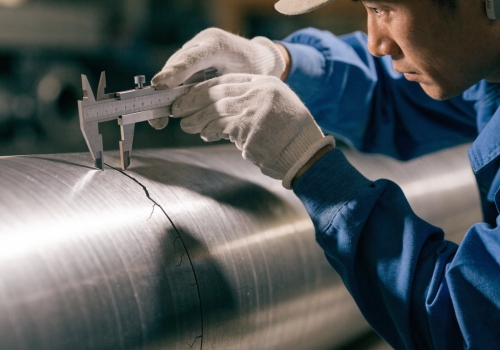
Do your pipes fail to fit during installation? Wrong sizes waste your time. This happens when the outer diameter misses the target limits. We can stop this. Excessive tolerance happens when the seamless pipe dimensions fall outside the standard range. Poor process control during the rolling or sizing stages causes this issue. Old machines with low precision also force the steel pipe sizes to exceed allowed limits.
Let us look closer at why dimensions fail. In my 18 years of working with construction materials, I often see projects stop because the pipes do not match the fittings.
Modern construction needs exact sizes. If a factory uses old piercing machines, the steel cannot hold a tight shape. Here is what we check:
· Wall thickness: Must handle the planned pressure safely.
· Inner diameter: Must allow smooth fluid flow without blocks.
To give you a clear idea, let us look at common tolerance limits. We follow strict international rules at Centerway Steel to stop these errors.
| Pipe Size | Outer Diameter Tolerance | Wall Thickness Tolerance |
|---|---|---|
| Under 50mm | ±0.5mm | ±12.5% |
| 50mm to 100mm | ±0.75% | ±10% |
| Over 100mm | ±1.0% | ±10% |
We stop size errors before the goods ship to your site because we check these numbers during production. You save money because you do not have to return bad items.
Do you worry about leaks in pressure lines? A cracked tube destroys your whole system. It causes safety hazards. Let us find out why this happens. Cracking is the most serious quality problem in a seamless pipe. It shows up as splits on the surface or inside the metal. Bad raw materials, uneven force during the rolling process, or fast cooling cause these dangerous fractures. Cracks mean the pipe goes straight to the scrap pile. If a cracked pipe gets into your construction site, it will fail under pressure. This leak breaks your equipment and stops your work.
I always tell my production team to watch three things closely:
· Raw material quality: The final pipe will crack if the starting steel billet has uneven materials or hidden flaws.
· Rolling stress: Uneven force tears the metal when the machine punches a hole in the solid steel. Bad straightening also adds bad stress.
· Heat treatment mistakes: The steel must cool slowly. For example, if we heat a carbon steel pipe to 900°C and drop the temperature too fast, the metal locks up. The inside pulls against the outside, and it snaps. We test our billets before heating to stop this. We control the cooling speeds step by step. This care gives you a strong product that handles harsh building environments.
Are your pipes rough or bent out of shape? Ugly surfaces hide deep weak spots. Warping ruins the fit. We need to look closely at these flaws. Pockmarks are small bumps or holes on the seamless pipe surface. Poor pickling or uncleaned rust creates them. Warping means the pipe bends. Heat treatment leaves trapped stress or acid cleaning bites the metal unevenly to cause this bend. Surface defects act as more than just a bad look. They are weak spots. You expect a smooth and clean finish when you buy steel pipes.
Pockmarks form when the factory does not wash off the oxide skin during the pickling stage. The acid eats the rust but leaves holes. These rough spots cause trouble:
· Catch dirt and moisture quickly.
· Speed up future rust on the pipe.
· Create weak points that burst under high pressure.
Warping happens when a pipe looks like a bow instead of a straight line. Factories must bake the pipes evenly to remove stress. The metal bends if one side cools faster. Uneven acid baths also eat the metal unevenly, and this causes a warp. We fix this by running bent pipes through heavy straightening machines. But the best way is to control the heat from the start. A straight and smooth pipe makes welding much faster for your workers.
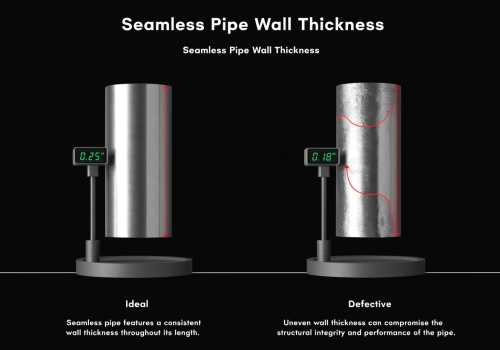
Does your pipeline shake or lose pressure? Uneven walls act as a hidden trap. Bad straightness weakens the whole structure. Let us fix these safety risks. Eccentricity means the wall thickness of the seamless pipe is uneven. This lowers safety and causes leaks. Poor straightness means the pipe is bent. Bad billet piercing, wrong equipment settings, or weak straightening machines cause both problems. You calculate the pressure based on the wall thickness when you design a water or gas line. Your math fails if the wall is thick on one side and thin on the other.
Eccentricity happens early in the factory. The whole pipe gets ruined when the hot punch hits the steel billet off-center. A thin wall cannot hold high pressure. It will swell and burst. Our production team centers the piercing tool perfectly every time to prevent this.
Straightness shows the true skill of a manufacturer. Special-shaped pipes need strict straightness. If a pipe bends:
· It does not slide into tight spaces.
· It puts extra stress on the joint welds.
· It blocks fluids from flowing well. Factories with old and weak machines cannot fix bent pipes. We use heavy-duty straighteners to ensure every seamless pipe meets your top building standards.
Q: What is the main cause of a cracked seamless pipe?
A: Poor raw steel billets, uneven force during piercing, and fast cooling during heat treatment cause cracks.
Q: How can I check the straightness of a steel pipe?
A: You can use a laser tool or a long straight edge. Factories use dial gauges to measure the exact bend per meter.
Q: Can I fix a pipe that has excessive tolerance?
A: No. You cannot shrink or grow a pipe once the factory makes it wrong. You must send it back or sell it as scrap.
Q: Do you test for these common problems?
A: Yes. We use ultrasonic testing and strict visual checks to stop cracks, pockmarks, and size errors before we ship.
Seamless pipe problems like cracking and bad sizes ruin projects. Centerway Steel provides tested and top-quality pipes. Contact us today to get reliable pipeline products for your next build.