 English
 Español
 Русский язык
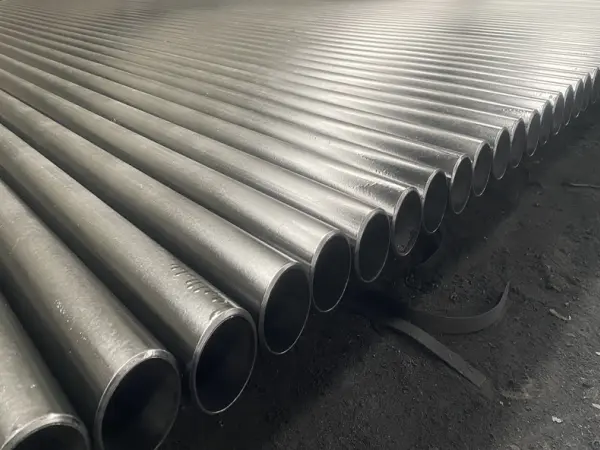
Are you struggling to find pipes that can handle high pressure? Welding seams often fail and cause leaks. A large diameter seamless pipe solves this problem for big projects. A large diameter seamless pipe is a hollow steel tube with an outer diameter over 108mm and no weld seams. It handles high pressure, high heat, and heavy fluid transport. Its continuous structure provides better strength and safety for major industrial pipelines.
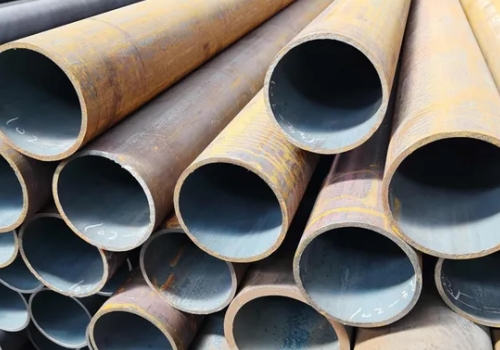
You might wonder how this pipe can hold so much pressure without breaking. Let me show you the details below.
Weak pipes cause dangerous leaks and heavy delays. Standard welded pipes cannot meet strict project rules. We use advanced production steps to make sure every pipe stays strong. We make these pipes using hot rolling or cold drawing. We heat a solid steel round billet to 1250°C and pierce it. Then we roll it to the right size and cool it. Finally, we test it for hidden flaws to ensure top quality. Let me break down our production process for you. We focus on two main ways to make a large diameter seamless pipe.
This is our main method. We heat the round steel billet to 1100-1250°C. The hot metal becomes soft. We push it through a piercing machine to make a hollow shell. Next, we use a rolling machine. This reduces the wall thickness and sets the outer diameter. We then cool it and straighten it.
Sometimes you need a thinner wall or exact sizes. We take the hot-rolled pipe and pull it through a die. This is cold drawing. It takes more time. It gives a much better surface and higher accuracy.
We never skip testing. Heat control changes the metal grain. We cool the pipes carefully to make them strong. We use ultrasonic tests. This checks for internal cracks. Here is our simple step-by-step path:
| Step | Action | Purpose |
|---|---|---|
| 1 | Heating Billet | Softens steel for shaping |
| 2 | Piercing | Creates the hollow center |
| 3 | Rolling | Sets diameter and thickness |
| 4 | Flaw Detection | Finds hidden cracks |
| 5 | Hydraulic Test | Checks pressure safety |
Picking the wrong metal costs a lot of money. Rust and high pressure can destroy bad pipes quickly. You must choose the right steel grade for your specific job. You can choose carbon steel, low-alloy steel, alloy steel, or stainless steel. Carbon steel like Q235 is cheap for basic fluids. Alloy steel handles high pressure. Stainless steel stops rust in chemical jobs. The right choice depends on your project environment.
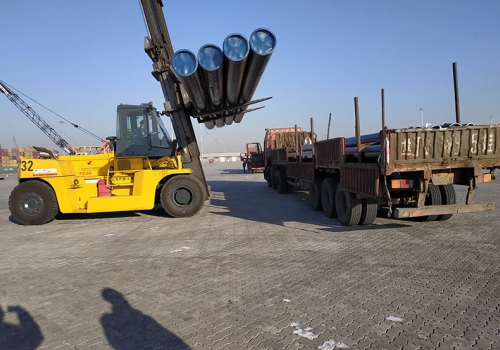
We supply many different materials from our factory. Let us look at the main steel types.
This is very common. We use Q235 and 20# steel. Q235 is cheap and good for normal buildings. 20# steel has great overall strength. We use it for basic machine parts and water lines.
Think about Q345. We add small amounts of special metals. This makes the steel stronger and stops rust better. We send many Q345 pipes to heavy bridge projects.
For really high pressure, we use 40Cr or 20CrMo. These metals are very hard. They are perfect for big machine shafts and hot gas lines.
Grades like 304 and 316L are perfect for bad chemical environments. They do not rust easily. I remember a recent water project in Africa. We helped the local EPC team choose the right Q345 steel. The weather there is tough. The earth shifts a lot. But our Q345 pipes hold up perfectly. They finished the project on time and saved money. Here is a quick guide:
| Material Type | Common Grades | Best Use Case |
|---|---|---|
| Carbon Steel | Q235, 20# | Basic fluid pipes, normal structures |
| Low-Alloy | Q345, Q390 | Heavy load frames, tough weather |
| Alloy Steel | 40Cr, 20CrMo | High-pressure lines, power plants |
| Stainless | 304, 316L | Food, chemical, high rust risk |
Guessing pipe weight ruins your shipping budget. Wrong sizes cause bad connections on the job site. You need exact math and standard sizes to keep your project cheap and safe. A large diameter seamless pipe usually ranges from 108mm to 1200mm in diameter. The wall thickness goes from 5mm to 50mm. You can calculate the weight per meter using a simple math formula: (Outer Diameter - Wall Thickness) × Wall Thickness × 0.02466. You must know the exact size and weight of your large diameter seamless pipe. We make pipes up to 3600mm if you need them. 108mm to 1200mm is our normal range.
You can find the weight yourself. Use this simple formula: Weight (kg/m) = [(Outer Diameter - Wall Thickness) * Wall Thickness] * 0.02466 This helps you plan your shipping costs. I use this formula every day when I talk to clients.
We follow strict API standards. EPC buyers often ask for DN150, DN200, or DN250. Let us say you need a pipe with a 500mm outer diameter and 10mm wall thickness. Let us do the math: (500 - 10) * 10 * 0.02466 = 120.83 kg per meter. I recently calculated this exact size for a client in Turkey. They needed to fill 50 shipping containers. Knowing the exact weight helped them save thousands of dollars on ocean freight.
| Specification | Normal Range | Maximum Limit |
|---|---|---|
| Outer Diameter | 108mm - 1200mm | Up to 3600mm |
| Wall Thickness | 5mm - 50mm | Custom sizes available |
| Standards | API, ASTM, DIN | API 5L is most common |
Pipe failures stop production and cause huge safety risks. Welded joints often crack under heavy pressure. You need a reliable pipe to keep your massive industrial projects running. These pipes have no seams, which stops stress points. They offer high mechanical strength and strong corrosion resistance. You can use them in oil energy, chemical plants, bridge building, and long water lines. They keep your fluids moving safely.
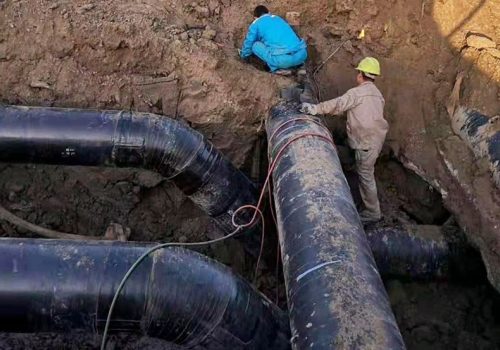
A large diameter seamless pipe gives you peace of mind. Let us look at why they work so well.
First, they are uniform. The seamless body stops pressure from breaking weak points. Second, they are very strong. We use heat treatments to balance toughness. Third, we can coat them to stop rust.
We sell these pipes all over the world for many uses. Energy Sector: They carry oil and gas over long distances. Power plants use them for superheaters. Chemical Industry: They move bad acids safely. They stop leaks in heat machines. Construction and Transport: Big stadiums and airports use them as main pillars. A few months ago, we worked with a big EPC company in Turkey. They built a new gas network. We sent them high-grade seamless pipes. They loved the uniform strength. We also sent miles of these pipes to a big mining setup in Africa. Our pipes handle the high pressure and rough earth perfectly.
| Industry | Main Application | Key Benefit |
|---|---|---|
| Oil & Gas | Long pipelines | High pressure safety |
| Chemical | Acid transport | No leaks, stops rust |
| Construction | Airport pillars | Heavy load support |
A large diameter seamless pipe offers unmatched strength for major projects. By choosing the right material and size, you can build safe, long-lasting pipelines anywhere in the world.