 English
 Español
 Русский язык
Are you losing money due to sudden pipeline leaks and weak welds? Fluid transportation demands absolute safety, but choosing the wrong pipe can cause costly project shutdowns and severe safety hazards.
The working principle of fluid seamless pipe relies on a continuous, weld-free hollow steel section. It eliminates weak points to allow smooth, high-pressure liquid and gas transmission across long-distance engineering pipeline networks.
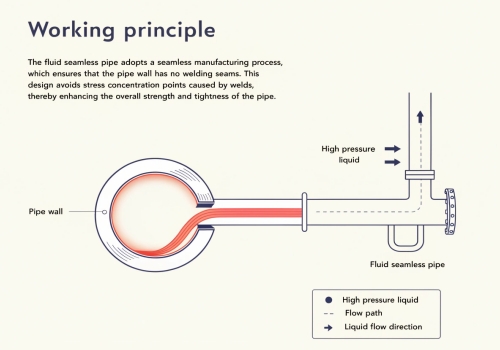
Last year, I managed a major municipal pipeline project in Nigeria. The local team faced high-pressure tropical environment issues, and standard welded pipes kept cracking at the seams. I advised them to switch entirely to seamless options, which completely solved their pressure loss problems. Let us look deeper into how these pipes work and how we measure their flow.
Are you wondering how a pipe without any seams manages heavy structural stress and fluid flow? Traditional pipes fail under pressure because their welded joints create natural structural weak points.
The working principle of fluid seamless pipe is based on its uniform hollow cross-section. This structural integrity distributes internal fluid pressure equally across the entire pipe wall to prevent localized bursts and leaks.
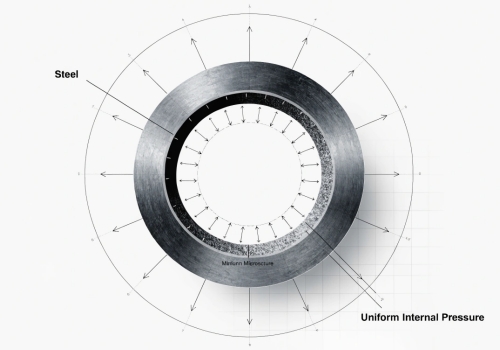
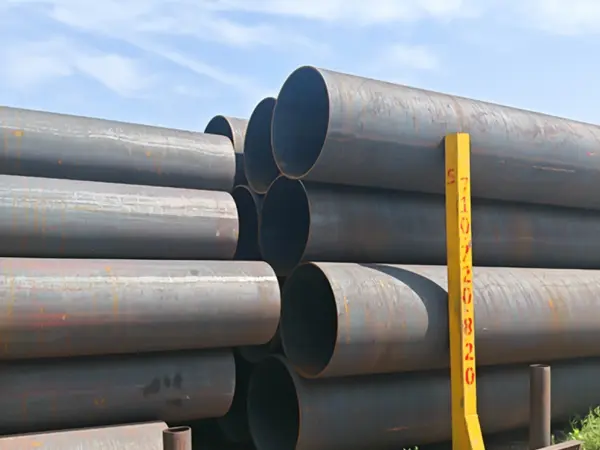
Fluid seamless pipes are made from a solid round steel billet. Workers heat this billet and pierce it through the center. This process turns a solid piece of metal into a perfect hollow tube without any welding lines. Because there is no weld seam, the fluid faces less friction inside the pipe. This smooth inner surface allows water, oil, or gas to flow quickly and safely.
The absence of a weld seam means the pipe has the same strength at every single point. When high-pressure fluids travel through the line, the stress spreads evenly. In Nigeria, our partners used these pipes for a deep-water oil transport project. The uniform wall thickness safely contained the high-pressure crude oil without any wall distortion.
| Pipe Feature | Fluid Seamless Steel Pipe | Welded Steel Pipe |
|---|---|---|
| Weld Seams | None (100% solid continuous body) | Has longitudinal or spiral welds |
| Pressure Limit | Extremely High | Moderate to Low |
| Inner Wall Friction | Very Low (Smooth fluid flow) | Higher near the weld line |
| Leakage Risk | Near Zero | Higher at the seams |
How do engineers track the speed and volume of fluids moving inside these seamless systems? Choosing the right measurement tool depends heavily on the pipe structure and the behavior of the fluid.
The working principle of fluid seamless pipe provides a stable, predictable environment for advanced flowmeters. These devices measure fluid velocity, mass, and induction currents without damaging the continuous pipe body.
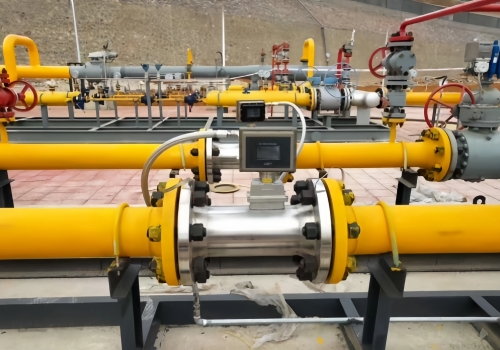
A vortex flowmeter places a small obstruction inside the seamless pipe. As the fluid hits this obstacle, it creates regular swirls called vortices. The speed of these swirls matches the speed of the fluid directly. This tool has no moving parts. It works great for clean liquids and steam because dirt cannot get trapped easily. However, the fluid must move fast to create these swirls, and the process can make some noise.
This tool measures gas flow by tracking temperature changes. The meter uses a small heating sensor inside the pipe. As gas passes by, it cools the sensor down. By measuring how much heat the sensor loses, the meter calculates the exact mass of the gas. This technology is excellent for large-diameter seamless pipes because it does not require holes in the pipe walls, which keeps the system airtight.
This device uses a vibrating seamless steel tube to measure mass flow. When fluid passes through the vibrating tube, it causes a slight twist or deflection in the pipe structure. Sensors measure this tiny twist to find the exact weight of the moving liquid or slurry. This method gives highly accurate data. However, you must inspect the pipe walls regularly to make sure corrosion does not change the vibration pattern.
This meter uses Faraday’s Law of electromagnetic induction. The moving fluid acts as an electrical conductor inside a magnetic field. As the liquid flows through the seamless pipe, it creates a small electric voltage. Two electrodes pick up this voltage, and a transmitter calculates the precise flow rate based on the pipe size. This tool is perfect for wastewater and conductive chemicals because it offers zero resistance to the flow.
· Thermal Mass Method: Best for large-scale gas pipelines that need exact mass data.
· Coriolis Method: Best for thick slurries and high-value liquids requiring top accuracy.
· Electromagnetic Method: Best for conductive liquids, acids, and municipal water networks.
The working principle of fluid seamless pipe ensures safe, high-pressure fluid transport without leaks. At Centerway Steel, we deliver premium seamless steel pipe solutions for projects worldwide. Contact us today to secure your pipeline system.