 English
 Español
 Русский язык
Pipeline failures can cost your company millions and ruin your reputation instantly. You cannot afford weak points in high-pressure systems. You must understand how proper inspection prevents these disasters before buying. Strict quality control in seamless tube production ensures that pipes withstand extreme pressure and temperature without bursting. By using ultrasonic testing, hydrostatic checks, and chemical analysis, manufacturers verify that the steel billet has no internal defects, guaranteeing uniform strength and safety for your critical industrial infrastructure.
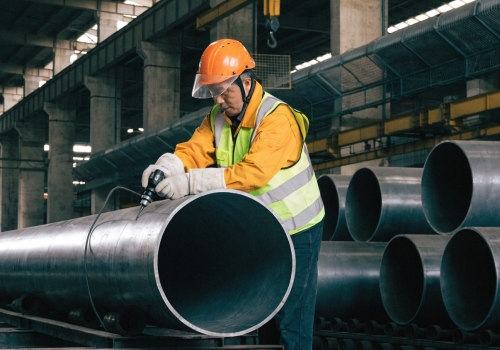
I have spent 18 years in the construction industry as a Purchasing Manager. I have seen projects delayed by months because of bad materials. Finding a supplier is not just about price; it is about trust. I want to share my experience on how to spot real quality.
Many people choose cheaper welded pipes to save money upfront. This often leads to leaks and expensive repairs later. You need to know why seamless is worth the investment. Seamless pipes have no weld seam, which is usually the weakest point in a tube. They are made from solid billets, offering uniform strength and better corrosion resistance. This makes them the only safe choice for high-pressure oil, gas, and power generation projects.
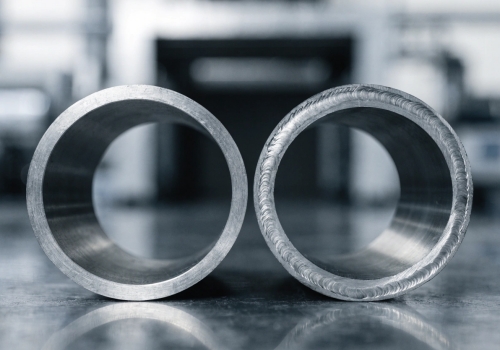
In my early days as a designer, I worked on a chemical plant project. We used welded pipes for a high-pressure line to save budget. It was a mistake. The seam failed under vibration, and we had to shut down for a week. Since then, I always prefer seamless pipes for critical areas. The main difference lies in the manufacturing. Seamless pipes start as a solid round steel billet. The factory heats this billet and pushes or pulls it over a form until the steel shapes into a hollow tube. Because there is no welding, the structure is consistent all the way around. This process naturally supports quality control in seamless tube production because the material remains uniform. When you look at the types, we usually categorize them by material or production method. For example, carbon steel is great for general infrastructure, while we need alloy steel for high-stress gears or shafts. For my current projects in corrosive environments, I rely heavily on stainless steel seamless pipes. They contain chromium and nickel, which stops rust. Here is a simple breakdown I use when explaining this to my engineering team:
| Feature | Seamless Pipe | Welded Pipe |
|---|---|---|
| Structure | Uniform, no seam | Longitudinal weld seam |
| Pressure Limit | High (Best for critical use) | Low to Medium |
| Corrosion | Excellent resistance | Weld area is vulnerable |
| Cost | Higher | Lower |
| Reliability | Very High | Variable |
A certificate on paper is not enough proof of quality. You need to understand the actual tests performed in the factory. Ignoring this leads to accepting defective materials. The most important steps include chemical analysis to verify steel grades and mechanical testing for tensile strength. Non-destructive testing, such as ultrasonic and eddy current inspections, detects hidden internal cracks. These physical tests ensure the pipe meets international standards like ASTM and API.
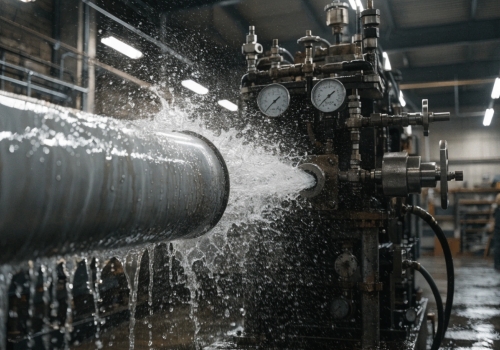
I once visited a factory that skipped the hydrostatic test to ship faster. I rejected the whole batch. Real quality control in seamless tube production means every single pipe goes through rigorous testing. At Centerway Steel, we see this discipline. Let's break down the specific tests that a good manufacturer must perform. First, there is the chemical analysis. We need to know the exact percentage of carbon, manganese, and sulfur. If the mix is wrong, the pipe will be too brittle or too soft. Next is the mechanical testing. This includes pulling the metal until it breaks (tensile test) and hitting it to see how much energy it absorbs (impact test). For me, the most critical part is Non-Destructive Testing (NDT). This allows us to see inside the steel without damaging it.
· Eddy Current Testing: Great for finding surface defects.
· Hydrostatic Testing: We fill the pipe with water at high pressure to ensure it does not leak. Also, dimension checks are vital. If the wall thickness varies too much, the pipe will fail. A good supplier uses laser measurements to ensure precision.
| Test Method | Purpose | Why it matters to me |
|---|---|---|
| Chemical Analysis | Check material composition | Ensures the steel grade is correct. |
| Tensile Test | Measure strength | verifies the pipe can hold the load. |
| Hydrostatic Test | Pressure check | Proves the pipe will not leak. |
| Ultrasonic Test | Internal inspection | Finds hidden flaws eyes cannot see. |
If a supplier cannot provide reports for all these tests, run away. It is not worth the risk.
Finding a supplier is easy, but finding a partner is hard. A bad supplier delays your project and sends wrong specs. You need a checklist to filter them. You must look for manufacturers with ISO certifications and third-party inspections from SGS or TUV. A reliable supplier offers integrated services, from production to shipping, and provides full traceability reports. They should handle large diameters and specific alloy requirements without outsourcing crucial steps.
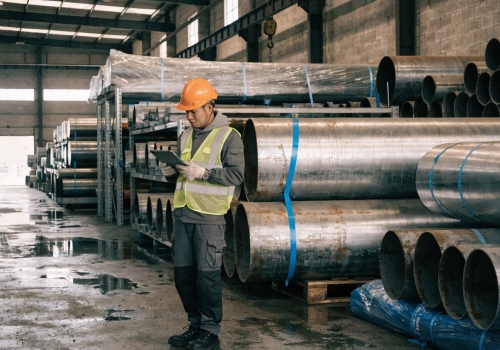
In my 18 years of sourcing, I have realized that integration is key. I need a "one-stop" shop. When I work with Centerway Steel, I appreciate that they integrate production, inventory, and sales. They have been doing this since 1996. When I evaluate a supplier, I look for their track record. Have they supplied to Fortune 500 companies like Shell or CNPC? This shows they understand high standards. Quality control in seamless tube production is not just about the machine; it is about the management system. I look for ISO 9001 and ISO 14001 certifications. These tell me the factory is managed well. Another huge factor is third-party inspection. I often ask for SGS or TUV to inspect the goods before shipment. A confident supplier will never say no to this. I also look at their range. Can they handle large diameters? Do they have heavy thickness options? Centerway Steel, for example, has first-class processing capabilities for these difficult products. They export to over 100 countries, which gives me confidence they understand international logistics. Here is my personal checklist for choosing a partner:
1. Certifications: Do they hold ISO, CE, and API licenses?
2. References: Have they worked with major EPC companies?
3. Transparency: Do they welcome third-party inspectors?
4. Capacity: Can they make the specific size I need?
5. Service: do they offer one-stop service to save me time? We always adhere to the philosophy of being "Customer-Oriented". You want a partner who pursues a win-win situation, not just a quick sale.
Seamless pipes provide unmatched safety for critical projects, but only if they undergo strict testing. Always verify that your supplier prioritizes quality control in seamless tube production and holds valid certifications. Choose a reliable, integrated partner like Centerway Steel to ensure success.