 English
 Español
 Русский язык
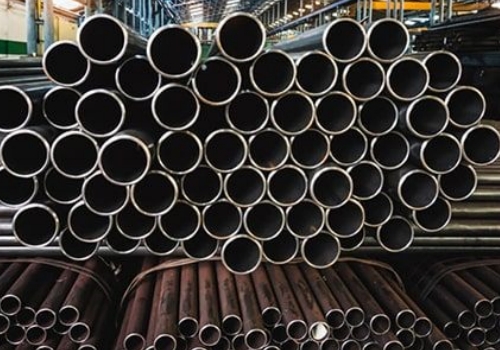
Cold weather can break standard pipes. You lose money and time. I will show you how low-temperature carbon pipes fix this problem forever. astm a333 gr 6 seamless steel tubes are low-temperature carbon steel pipes. Factories design them for cold environments up to -45°C. These pipes stop brittle breaks. Industries use them widely in oil, gas, and power projects.
You want safe pipelines in cold weather. You need to know the right materials. I will break down everything about these tubes. You can stop reading if you do not build pipelines in cold places.
Project failures in freezing weather cost millions. You need materials that survive extreme cold. These specific tubes give you unmatched strength and safety. You should choose astm a333 gr 6 seamless steel tubes because they resist cracking under extreme cold. They offer great durability. Their strong carbon makeup ensures long-term safety in harsh environments.
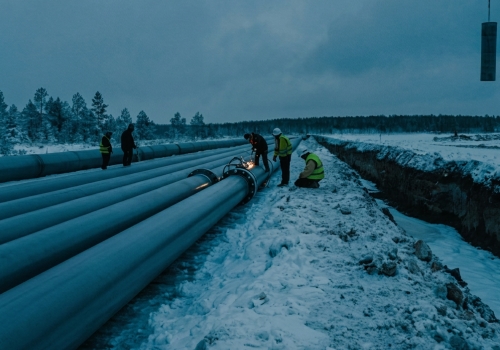
I have worked in the steel pipe industry for many years. I want to share a real story about a recent project. A client in Turkey needed reliable pipes for a winter pipeline. The local weather gets very cold in the mountains. Standard pipes often fail there. The client needed a one-stop supplier. We stepped in to help. We supplied high-quality astm a333 gr 6 seamless steel tubes to them. These pipes handled the freezing temperatures easily. We shipped the pipes directly to their site in Turkey. We provided bare packing with wooden protection at the ends. The project finished on time. The client saved a lot of money. They did not face any pipe cracking issues during installation. We test every pipe before shipment. We do impact tests and hydrostatic tests. This ensures total safety for every batch. You can trust our strong supply chain. We manufacture pipes from 1/2 inches to 24 inches. We keep a large inventory in stock. This means fast delivery for your urgent needs. Our strict quality control means you get the best products every single time. You can trust our experience in international markets like Turkey.
| Benefit | Description |
|---|---|
| Cold Resistance | Works safely down to -45°C (-50°F) |
| High Toughness | Stops breaks in cold climates |
| Rust Resistance | Fights rust in damp areas |
| Easy Customization | Easy to weld and form |
Guessing technical specs ruins pipelines. You face leaks and safety hazards. I will give you the exact chemical and mechanical data you need right now. The tubes have a maximum carbon content of 0.30%. They have a minimum tensile strength of 415 MPa. They require strict impact testing at -45°C. These exact numbers guarantee they perform perfectly under high pressure in sub-zero places.
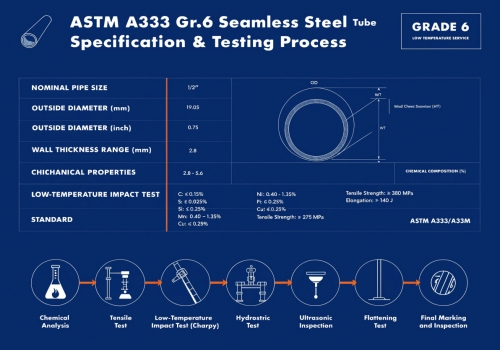
You must know the exact numbers to make the right choice. I always check the chemical makeup first. This carbon steel grade has precise limits. These limits make the steel tough but flexible. The manganese adds strength to the tube walls. The low phosphorus and sulfur keep the steel very pure. Pure steel does not break easily in the extreme cold. I also check the mechanical properties. The tensile strength must reach at least 415 MPa. The yield strength must hit 240 MPa. We test every batch in our factory. We follow strict international rules like ASTM and ASME. You also need to know the dimensions. We provide pipes in lengths of 5 to 13 meters. You can choose a single random length or a double random length. We can also customize the size for you. You can request plain ends or beveled ends. We offer different coatings like epoxy or color paint. You need these numbers and options when you buy pipes. We always give you a Material Test Certificate. We use standard third-party inspection agencies like SGS or TUV. You get full transparency with every order.
| Chemical Element | Composition (%) |
|---|---|
| Carbon (max) | 0.30 |
| Manganese | 0.29 - 1.06 |
| Phosphorus (max) | 0.025 |
| Sulfur (max) | 0.025 |
| Mechanical Property | Data |
|---|---|
| Tensile strength, min | 415 MPa |
| Yield strength, min | 240 MPa |
| Elongation, min (L/T) | 30 / 16.5 % |
Buying the wrong pipe grade is a huge mistake. Your pipeline might burst. I will show you the differences and answer your biggest questions clearly. A106-B pipes are for high-temperature use. A333-6 pipes are for low-temperature environments. They have similar mechanical strength. But A333-6 goes through strict cold tests. Choosing the right one depends entirely on your working temperature.
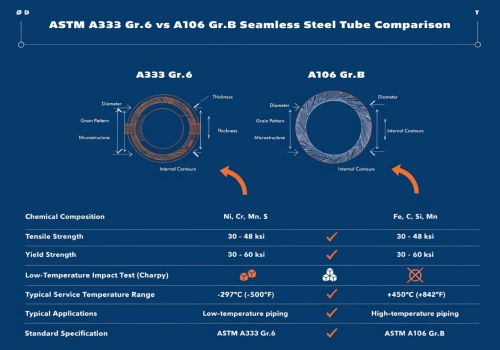
Many buyers confuse these two materials. I see this mistake happen often. I want to make it very simple for you. You use A106 Grade B for hot environments. You use A333 Grade 6 for cold environments. Their chemical limits have small differences. A106-B allows slightly more phosphorus and sulfur. A106-B is usually a seamless pipe. The A333-6 grade can be seamless or welded. But seamless is much more popular for high-pressure jobs. The mechanical properties are exactly the same. Both have a minimum tensile strength of 60,000 psi. You just need to check your working temperature. I put together some common questions my clients ask me every day.
Q: What information do I need to buy these pipes?
A: You need to tell me the quantity, size, wall thickness, end finish, and if you want seamless or welded pipes.
Q: What is the lowest strike test temperature for A333 Grade 6?
A: The lowest temperature for the strike test is -45°C or -50°F.
Q: What kind of surface treatments do you offer?
A: We offer oil-dip, varnish, passivation, phosphating, and shot blasting.
Q: How do you pack the pipes for long sea journeys?
A: We use bare packing, bundle packing, or crate packing. We add wooden protection at both ends.
Q: Do you offer value-added services?
A: Yes. We offer machining, sand blasting, galvanizing, and heat treatment. You must match your pipe to your weather. If you work in cold places, you have your perfect answer now.
astm a333 gr 6 seamless steel tubes offer unmatched safety for cold pipelines. I hope this guide helps you choose the perfect material for your next construction project.