 English
 Español
 Русский язык
Machinery breakdowns cost money and time. If your cylinders fail due to poor material selection, your operation stops. Let me show you exactly how to prevent this by choosing the right tubing specifications. A hydraulic cylinder tube is the seamless metal barrel that houses the piston and withstands internal fluid pressure. It requires high tensile strength, precise dimensional tolerances, and a smooth inner surface finish to ensure efficient sealing and prevent leakage in industrial machinery.
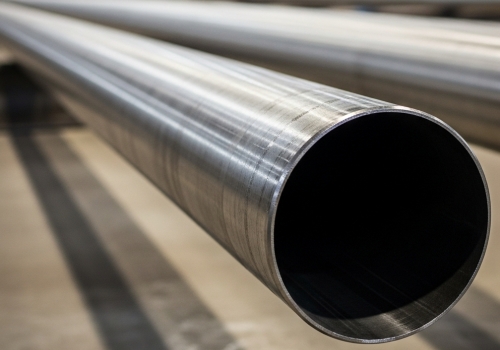
In heavy industry, the tube is a pressure vessel, not just a pipe. Many procurement managers focus on seals, but if the hydraulic cylinder tube has a rough inner surface or weak yield strength, even the best seals will fail.
Using inferior materials that look good externally but lack internal integrity leads to bursts and leaks. High-quality tubing must possess high yield strength to resist bursting, excellent surface hardness to reduce wear, and precise concentricity. These features ensure the hydraulic system operates smoothly under high pressure without premature seal failure. At Centerway Steel, we focus on three non-negotiable areas. First, the steel must have high yield strength to prevent "ballooning" under pressure. Second, the surface roughness is critical; the bore must be smooth enough for seals to glide but hold enough texture to retain a microscopic oil film for lubrication. Finally, dimensional accuracy ensures the piston moves without binding.
| Feature | Standard Metric | Why it Matters? |
|---|---|---|
| ID Tolerance | H8 / H9 | Ensures the piston fits perfectly. |
| Surface Roughness | Ra 0.2 ~ 0.4 microns | Balances seal life with lubrication. |
| Straightness | 0.5mm / 1000mm | Prevents piston binding on long strokes. |
| Yield Strength | ≥ 355 MPa (for ST52) | Prevents the tube from bursting. |
Choosing the wrong processing method can inflate costs or reduce efficiency. Honed tubes use abrasive stones to create a cross-hatch pattern for oil retention, while Skived and Roller Burnished (SRB) tubes use rollers to compress the surface. SRB is faster and creates a harder inner surface, while honing offers superior precision for repairs.

In the past, honing was the only option, but today, Skiving and Roller Burnishing (SRB) is the industry standard for mass production. The Honing Process: A rotating head grinds metal away slowly. It creates a cross-hatch pattern excellent for oil retention, making it ideal for large diameters or repairing old tubes, despite being slower. The SRB Process: This efficient two-step process cuts (skives) and presses (burnishes) the inside simultaneously. The rolling action compresses the steel grain, making the inner surface harder and more wear-resistant. For new equipment manufacturing, I usually recommend SRB for its superior cost-performance ratio.
A tube that is too soft will deform, while one that is too brittle may crack in cold weather. The most common materials are carbon and alloy steel. Grades like ST52 (E355) offer a balance of weldability and strength for general construction, while AISI 1045 provides higher hardness. Your choice depends on the working pressure and environmental conditions. When clients ask for advice, I look at the working environment first.
· ST52 / E355: The industry standard. It is a low-alloy, high-strength steel that is easy to weld—crucial for attaching mounts—and has good impact resistance.
· AISI 1045: Contains more carbon. It is harder and stronger but requires special welding procedures to avoid cracking.
· 27SiMn: Popular in mining for its high strength and hardenability. Beyond the grade, purity matters. Inclusions in cheap raw steel become scratches during processing, which is why we strictly control chemical composition before manufacturing starts.
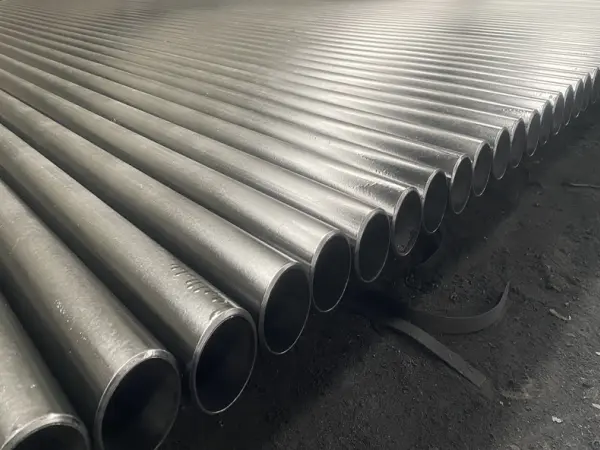
Without a high-quality raw material base, even the best processing cannot save a cylinder from failure. A hydraulic cylinder tube starts its life as a raw seamless steel pipe. The "seamless" nature is critical because it provides uniform strength around the circumference, eliminating weak points found in welded seams that could burst under pressure. Every hydraulic cylinder tube is, at its core, a Seamless steel pipe. You simply cannot use welded pipe for high-pressure hydraulics; under 3000+ PSI, a weld seam will likely split or damage seals due to uneven surfaces. As a supplier since 1996, Centerway Steel integrates the supply chain by controlling the quality of the raw Seamless steel pipe. We ensure the pipe undergoes cold drawing and stress relief before honing or burnishing. By treating the seamless pipe as the skeleton of the system, we ensure our customers receive products that withstand the toughest conditions.
Selecting the right tubing requires balancing pressure ratings, surface finish, and material grade. Whether you need SRB or honed finishes, the foundation is always a high-quality seamless pipe. Trust Centerway Steel to provide the integrated solutions your projects demand.