 English
 Español
 Русский язык
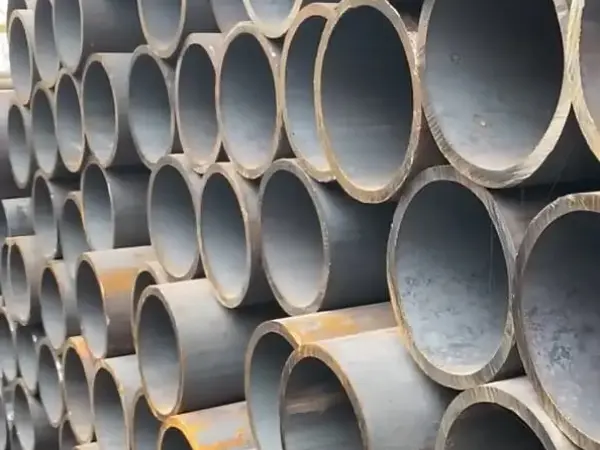
In the manufacturing and application of seamless steel tubes, quality assurance is one of the most critical factors. Among the various non-destructive testing methods, lamination testing seamless steel tubes has become a standard requirement in many industries, including oil & gas, energy, automotive, and construction. This article provides a comprehensive overview of lamination testing, why it matters, how it is performed, and its impact on the performance of seamless steel tubes.
Lamination testing is a non-destructive testing (NDT) method used to detect internal defects, such as laminar separations, inclusions, or layered discontinuities inside steel tubes. These imperfections are often invisible on the surface but can significantly reduce the structural integrity of the tube under high pressure or stress conditions.
For seamless steel tubes, lamination testing ensures that the tube walls are free from hidden delaminations that could compromise safety in demanding applications like high-pressure pipelines or boiler systems.
· Undetected laminations can lead to catastrophic failures in pipelines, boilers, and structural components. Lamination testing helps eliminate such risks.
· Industries such as petrochemicals, nuclear power, and aerospace follow strict international standards (ASTM, EN, ISO) that mandate lamination testing for seamless steel tubes.
· By ensuring defect-free products, manufacturers can deliver tubes that perform consistently in extreme environments.
· Identifying defects before delivery prevents costly breakdowns, repairs, or downtime in the field.
Several non-destructive methods are used to perform lamination testing seamless steel tubes, depending on the application and required level of inspection:
· Ultrasonic Testing (UT):
High-frequency sound waves are transmitted into the tube wall. Reflections indicate discontinuities such as laminations or inclusions.
· Magnetic Particle Inspection (MPI):
Suitable for detecting surface and near-surface defects. Though less common for deep laminations, it can be used in combination with UT.
· Eddy Current Testing (ECT):
Effective for detecting surface-breaking defects, especially in thin-walled tubes.
· Radiographic Testing (RT):
Useful for detecting volumetric defects, but less commonly applied compared to UT for lamination-specific inspections.
· Oil and Gas Pipelines: To withstand high pressure and corrosive environments.
· Boiler Tubes: Used in power plants where steam pressure is extremely high.
· Automotive Components: For critical safety parts like drive shafts and axles.
· Structural Engineering: Where load-bearing capacity and reliability are essential.
The role of lamination testing seamless steel tubes cannot be overstated in ensuring safety, compliance, and reliability. By using advanced non-destructive testing methods, manufacturers and end-users can guarantee that the seamless tubes they rely on are free from hidden defects that could cause costly failures.
For industries operating under demanding conditions, lamination testing is not just a technical procedure—it is a safeguard for performance, safety, and long-term efficiency.