 English
 Español
 Русский язык
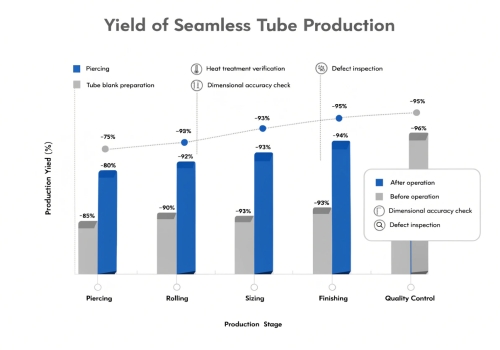
You want to save costs on your construction projects. High waste rates waste your money. You must understand the yield of seamless tube production to stop this terrible waste. The yield of seamless tube production is the weight of good products divided by the weight of raw materials. It shows how much material becomes a usable pipe. A higher yield means lower costs for your EPC projects. I will show you how to calculate and improve it.
Do you want to lose money on bad steel pipes? You will lose money if you stop reading now. Read on to learn the exact secrets of pipe yields.
Raw steel costs a lot of money. Bad manufacturing turns good steel into scrap. You need to know what yield means to choose the right supplier. The yield of seamless tube production measures the percentage of raw steel billets that turn into final pipes. It is a key indicator of factory efficiency. High yields mean the factory manages waste well. This leads to cheaper prices for buyers like you.
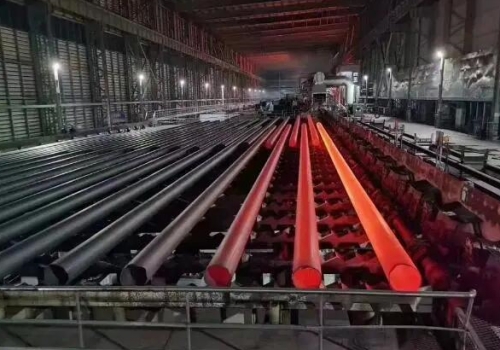
I visit many construction sites. Purchasing managers talk to me often. They want to cut costs. They always look at the pipe price. They do not look at the yield rate. I tell them to look at the yield rate. The yield of seamless tube production matters a lot. It shows the real cost of the pipe. A low yield means the factory wastes steel. The factory pays for this waste. Then the factory makes you pay for this waste. You pay higher prices for the final pipes. At Centerway Steel, we hate waste. We use good machines. We keep our yield high. We pass the savings to you.
Different pipes have different yield rates. I want to show you a simple table. This table explains the normal rates.
| Production Type | Typical Yield Rate | Reason for the Rate |
|---|---|---|
| Hot-rolled seamless tube | 85% to 92% | Standard heating and rolling process. |
| Cold-rolled precision tube | 75% to 85% | Needs more processing steps. More steps mean more waste. |
| Advanced continuous mill | 92% to 95% | Better technology reduces waste greatly. |
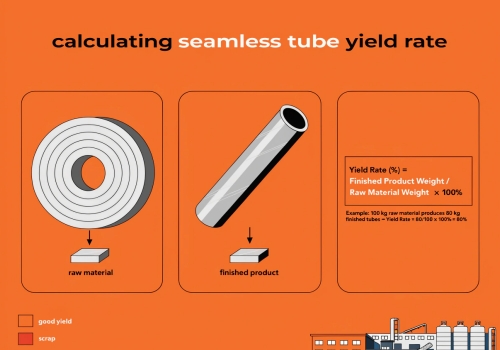
Math can be confusing. Wrong calculations lead to bad budget planning. You need a simple way to figure out the exact yield rate of a factory. You can calculate the yield rate using a simple formula. Divide the weight of the qualified products by the total weight of the raw materials. Then multiply by 100. This formula shows you exactly how much raw material becomes useful pipe.
I met a client last year. He asked me about our pipe costs. I showed him our yield calculation. He liked our transparency. He bought many pipes from us. You should know this calculation. It helps you talk to suppliers. You can ask them for their real numbers.
The math is very simple. Yield Rate = (Weight of Qualified Products / Total Weight of Raw Materials) x 100%
Let us look at a real example. A factory buys 100 tons of raw steel. The workers cut the steel. The workers heat the steel. The workers roll the steel into pipes. The factory checks the pipes. They find 91 tons of good pipes. The calculation is 91 divided by 100. Then you multiply by 100. The yield rate is 91 percent. The factory lost 9 tons of steel.
Where does this lost steel go? The steel goes to waste. The piercing machine cuts bad parts. The heating furnace burns the metal. Acid washes the pipes and eats the metal. You can check the table below. It shows all the waste factors.
| Stage of Production | Why Material is Lost | Normal Loss Rate |
|---|---|---|
| Piercing | Cutting bad parts from the tube ends. | 3% to 5% |
| Heating | Fire creates scale on the metal. | 1% to 2% |
| Pickling | Acid removes scale and some metal. | 0.5% to 1% |
| Testing | Factories cut pieces to test strength. | 0.1% to 0.3% |
You can use this data to check your suppliers. We track these numbers closely at Centerway Steel.
High waste makes pipes expensive. Factories must stop losing good steel. You need to know how good factories improve their yield to choose a reliable partner. Factories improve yield by controlling raw materials and upgrading equipment. They use better heating furnaces and high-precision rolling machines. They also train workers to spot mistakes early. These steps reduce waste and increase the final yield of the production line. I walk through our Centerway Steel factories every month. I watch our workers. I see them improve the yield of seamless tube production. I want to share our methods with you. We want to be your trusted one-stop supplier.
We start with the raw materials. Bad steel makes bad pipes. We buy the best steel billets. We check every piece of steel. We look for cracks. We throw away bad steel early. This saves time. This saves money.
Next, we look at the heating furnace. Hot fire burns the steel. The steel turns into scale. We lose metal this way. We use a special walking beam furnace. We control the heat very carefully. We use safe gases inside the furnace. These gases stop the steel from burning. We save a lot of metal here.
Finally, we check our cutting machines. The machines cut the ends of the pipes. Old machines cut too much good metal. We use new ultrasonic testing machines. The machines find the exact bad spot. The machines tell the blade where to cut. We cut only the bad metal. We keep the good metal. Sometimes we keep short pipes. We sell these short pipes to other projects. We waste nothing. Look at the table below. It summarizes our improvement methods.
| Improvement Method | Action Taken | Result for Yield |
|---|---|---|
| Material Check | Remove bad billets before rolling. | Stops scrap late in production. |
| Temperature Control | Use walking beam furnaces. | Reduces burned metal waste. |
| Smart Cutting | Use ultrasonic testing to guide cuts. | Saves good metal at tube ends. |
You buy from a smart factory. You get better pipes. You save money for your company.
You now know how to calculate and improve the yield of seamless tube production. High yield saves money. Choose Centerway Steel for high-quality pipes and great prices today.