 English
 Español
 Русский язык
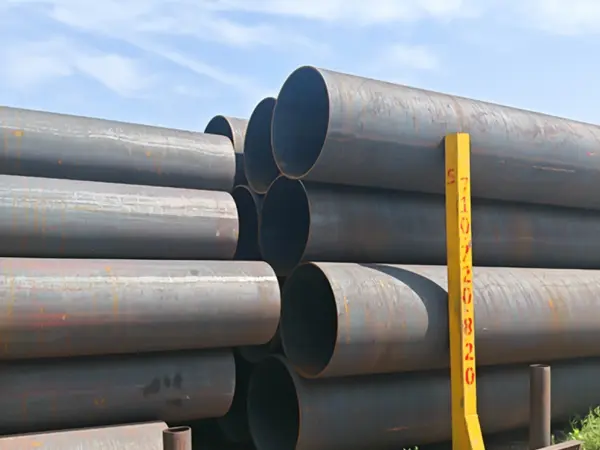
You face constant leaks and sudden cylinder failures. High pressure destroys poor pipes quickly. I will show you how to select the right tube to stop these costly downtimes. A seamless tube for delivery cylinder is a cold-drawn steel pipe without weld seams. It handles extreme pressure and provides a smooth inner bore. This seamless design prevents cracks, ensures seal compatibility, and extends the lifespan of your delivery systems.
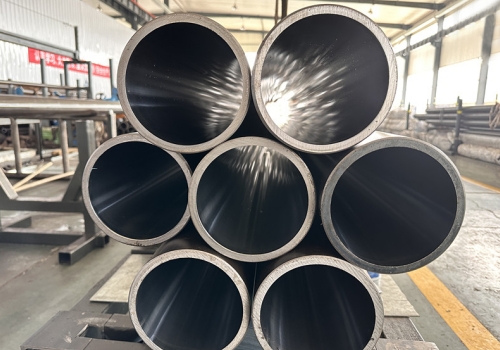
You might think any steel pipe works for this job, but this mistake costs you time and money. Keep reading to learn the exact specifications you need.
Weak welds cause blowouts under heavy loads. You lose thousands of dollars when a cylinder breaks. A seamless design removes this risk entirely and keeps your machines running. We make a seamless tube for delivery cylinder from a solid steel billet. We pierce and draw it into a hollow shape. This process completely removes weak weld seams, and it gives the tube uniform strength to survive constant high pressure.
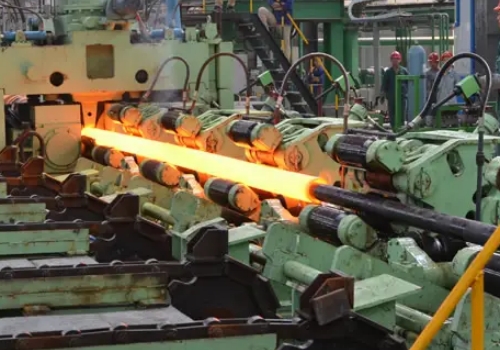
We follow a strict process to create these tubes. You need to know these steps to understand the quality of our products.
· Piercing: We push a tool through the hot steel to create a hollow center.
· Cold drawing: We pull the tube through dies at room temperature to reach the exact size.
· Heat treatment: We relieve the internal stress of the metal.
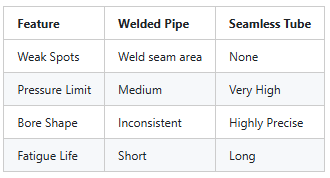
You gain big benefits when you avoid welded pipes.
· Higher pressure rating: The tube has no weak spots.
· Better bore quality: The inside remains perfectly round.
· Longer lifespan: It survives millions of piston strokes without breaking.
I recently helped a project manager fix his concrete delivery cylinder. His welded tube cracked after three months of use. We supplied a cold-drawn seamless tube, and his equipment works perfectly today. You save money when you choose the right part from the start.
Using the wrong steel causes rapid wear and sudden breaks. You cannot afford machine downtime. We help you match the exact steel grade to your specific working conditions. The best steel grade depends on your system pressure. You should use E355 or ST52 for standard applications. You need 27SiMn or 4140 for very high stress. The right grade gives you high yield strength and keeps your delivery cylinder running longer.
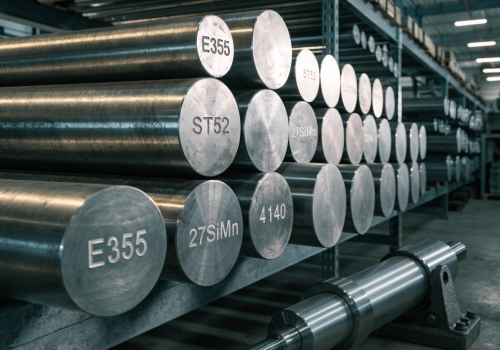
You must pick the right metal for your project. We offer several main options to fit your exact needs.
· E355 and ST52: You use these for normal jobs. They give you the best mix of strength and price.
· 27SiMn: You pick this for high-strength work. Many heavy construction machines use this grade.
· 4140 and 42CrMo4: You select these for extreme loads. They survive massive impacts and severe wear.
You often see different names for the same metal across the world. Use this table to understand the global standards.
| Standard Name | Low Pressure | Normal Pressure | High Strength | Extreme Duty |
|---|---|---|---|---|
| EN 10305-1 | E235 | E355 | - | 42CrMo4 |
| DIN 2391 | ST35 | ST52-3 | - | 42CrMo4 |
| ASTM A519 | 1020 | 1026 | - | 4140 |
| GB/T 3639 | 20# | Q355B | 27SiMn | 42CrMo |
You must tell us your operating pressure before you buy. If you pump hard materials, you need strong steel. A slightly higher material cost today prevents huge repair bills later. We always check your needs before we suggest a grade because we want your system to last for years.
A rough inside wall cuts your seals quickly. Oil leaks out and your machine stops. You stop this by demanding strict sizes and very smooth surface finishes. Precise sizes keep your seals tight and stop leaks. You must specify an H8 size tolerance for your seamless tube for delivery cylinder. You also need a surface roughness between Ra 0.2 and 0.4 μm. This exact finish holds oil and prevents early seal damage.
You cannot ignore the inside space of the tube. If the hole is too small, your piston gets stuck. If it is too big, your fluid leaks out.
· H8 Class: You ask for this for standard delivery cylinders.
· H9 Class: You pick this for simple, low-pressure tools.
Surface roughness (Ra) decides how long your seals live. You want a wall that is smooth but still holds a tiny bit of oil for lubrication.
| Finish Type | Roughness (Ra) | Best Use |
|---|---|---|
| Cold-drawn only | 0.8 - 1.6 μm | Simple metal frames |
| Honed finish | 0.2 - 0.4 μm | Normal cylinders and repairs |
| Rolled finish | ≤ 0.2 μm | Large factory production |
I visited a factory last year where the buyer bought cheap, rough tubes. The rough walls cut the rubber seals in just five days. The factory stopped working and they lost a lot of money. You must demand the right finish. Always ask your supplier to test the smoothness before they send the tubes to you.
You face a hard choice between two finishing methods. The wrong choice costs you more money or hurts your machine. I will explain both ways to help you. You should pick a honed finish for small orders and repair jobs because it creates a pattern that holds oil well. You should choose a rolled finish for large orders because it gives you a harder, smoother inside wall at a much lower cost.
We use rough stones to rub the inside of the tube. This creates a special pattern of tiny lines on the metal.
· Fixes mistakes: The stones easily correct small shape errors inside the tube.
· Slower speed: We take more time to finish each tube.
We cut the metal slightly and then press hard rollers against it. Engineers call this Skived and Roller Burnished (SRB).
· Harder wall: The heavy pressing makes the metal surface very strong.
· Faster work: We finish these tubes very quickly on our machines.
· Lower cost: You save money when you buy a large amount.
Look at this simple table to make your final choice.
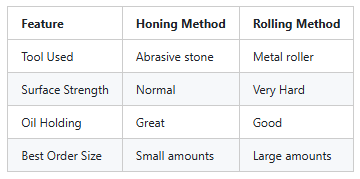
You get great results with both ways if you use them right. If you build custom machines, I tell you to buy honed tubes. If you make hundreds of standard machines, the rolling method saves you money and gives you great wear resistance. We do both methods at Centerway Steel, and we happily look at your drawings to give you the best advice.
What is the best heat treatment for delivery cylinder tubes?
You should always ask for the BK+S condition. This means we cold-draw the tube and then heat it to remove stress. This process keeps the metal stable when you cut it and helps it survive long-term use.
How do I check the quality of my tubes?
You must tell your supplier to measure every tube. You also need an Eddy Current Test to find hidden cracks inside the steel. Always ask us for the EN 10204 3.1 Mill Test Certificate to prove the quality.
Can I use a welded pipe for my cylinder?
No, you should never use a welded pipe for high-pressure delivery jobs. The weld line acts as a weak spot that breaks when the pressure changes. You need our seamless pipes to get safe and continuous strength.
How thick should the tube wall be?
Your wall thickness depends on your machine pressure and tube size. A normal 300-bar system needs a wall thickness of 12 to 15 millimeters for a 100-millimeter hole. You must ask your engineer to calculate the exact size for your safe operation.
You now know how to select the right material, size, and finish for your system. Contact Centerway Steel today to get high-quality pipeline products for your next project.